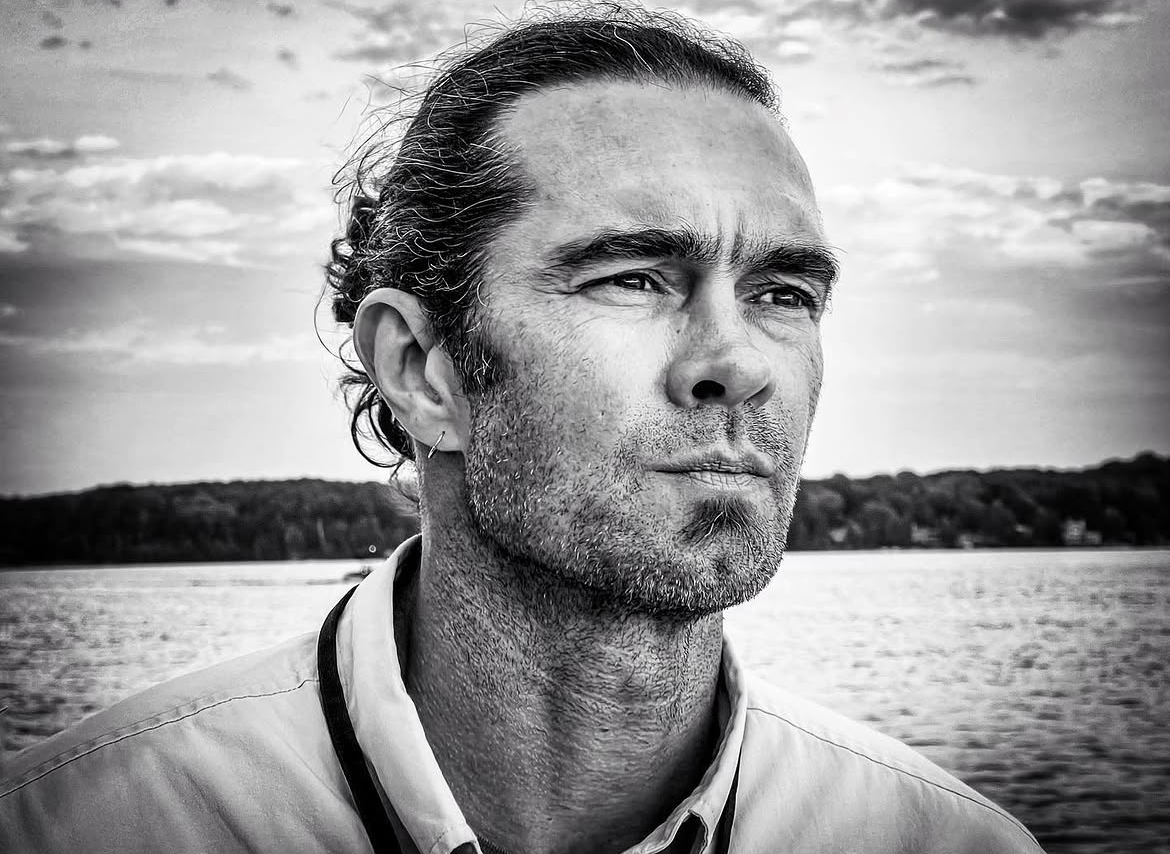
Derrick A.
Mason
Founder, Human Nature Advisory
Where this began
Derrick Mason spent his first professional decade as a teacher and school administrator. Not incidentally — formatively. Teaching and leading a school is, at its core, the practice of understanding how people receive information, what makes them shut down or open up, and how to hold a room when the stakes feel personal. Those years shaped a way of paying attention that no clinical training can fully replicate.
What followed was 17 years in clinical work as a marriage and family therapist — work that required sitting with people in significant conflict, navigating dynamics that were deeply entrenched, and developing a clinical understanding of how family and other complex relationship systems behave under pressure. Not individuals in isolation, but the patterns that emerge between people when the relationship itself becomes the problem.
Along the way, formal training as a family court mediator added a different kind of skill: not the capacity to understand conflict from the outside, but to facilitate resolution from inside it — to run a room where both parties are adversarial, the decision is consequential, and the conversation has to arrive somewhere real.
The business chapter
During his clinical career, Derrick also owned and operated a CrossFit gym — a business with staff, clients, a community, and all the interpersonal complexity that comes with leading a team in a high-performance environment. That chapter was not a detour. It was direct experience of what it costs when human dynamics inside an organization go unaddressed, and what it takes to lead through it.
It is also the reason this practice is not purely theoretical. The frameworks are clinical. The experience is real. The work that Human Nature Advisory does draws on both — not as parallel streams, but as a single, integrated understanding of how people behave in organizations, under pressure, when something significant is at stake.
The clinical foundation
The theoretical framework underlying this work is not a single methodology. It is a set of lenses developed over decades of clinical practice, each of which illuminates something the others do not.
Murray Bowen’s family systems theory — the idea that the problems presenting in any individual are better understood as the product of a relational system than as the property of a single person. Triangulation, differentiation of self, emotional reactivity under stress: these concepts were developed in a family context, but they describe with precision what happens in any group of people navigating shared stakes and unspoken history.
The Gottman method, developed through decades of research on what makes relationships functional under pressure — specifically, the patterns of communication that predict breakdown long before the breakdown becomes visible to the people inside it.
Carl Rogers’ foundational work on active listening and the conditions required for genuine change — the insight that people do not change because they are told to, but because they feel genuinely heard. This shapes not just how sessions are conducted but how the entire engagement is structured.
And the thinking of Jordan Peterson on responsibility, aspiration, and the cost of avoiding hard truths — the recognition that meaningful change requires confronting what is difficult, not managing around it indefinitely.
Background
I built this practice because the work I was doing in clinical settings kept revealing the same thing: the problems people bring to therapy are often the same problems destroying their businesses. The difference is that in business, there’s rarely anyone in the room trained to see it — and guide them through repairing it.
Derrick A. Mason